
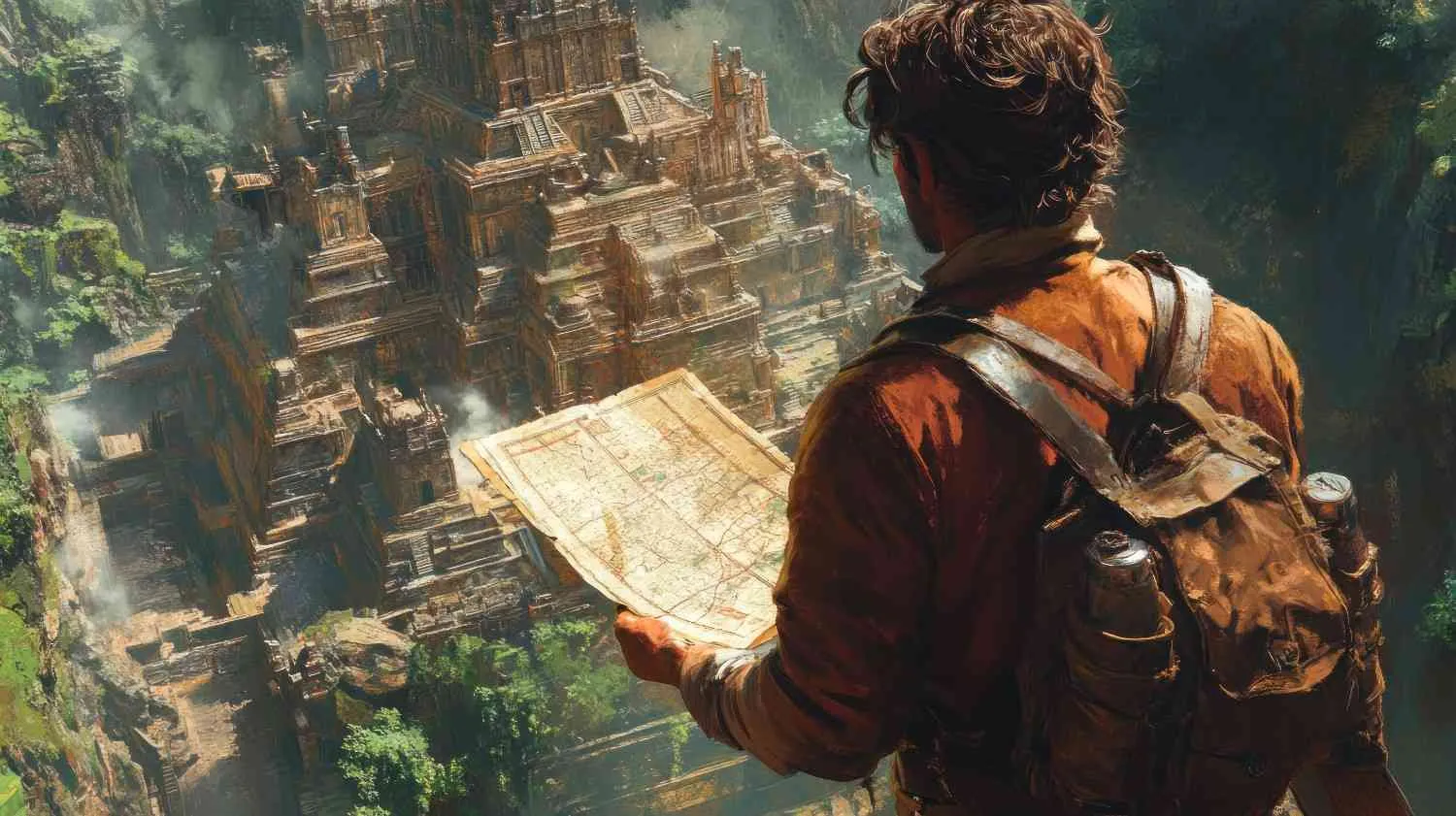
To write a pulse-pounding action-adventure novel, you must master the structural pacing that keeps pages turning while delivering formidable external obstacles that force your characters to change. Compelling action alone isn’t enough; readers stick around because they care about who is in danger and what they stand to lose.
1. Hook Readers Immediately (In Media Res)
- Skip long setups. Start right in the middle of a high-stakes event.
- Introduce immediate danger. Force characters into survival mode by page one.
- Raise instant questions. Drop a mystery, a betrayal, or an assassination early.
- Establish the catalyst. Give the hero an unavoidable reason to leave home.
2. Stack the Stakes
- Create a high-stakes quest. Make the ultimate goal crystal clear.
- Layer your conflicts. Combine physical, personal, and moral dilemmas.
- Escalate the danger. Strip away the hero’s greatest advantage as they advance.
- Use a ticking clock. Introduce a strict deadline or physical decay to force action.
3. Engineer Dynamic Action Scenes
- Vary the sequences. Mix up car chases, close-quarters combat, and tense stealth.
- Use sensory details. Write what characters smell, hear, and physically feel.
- Keep sentences short. Cut lengthy descriptions during fast combat.
- Ensure physical consequences. Injure your characters so the threat feels authentic.
- Drive the plot forward. Every battle must change the story’s direction.
4. Master the Ebb and Flow of Pacing
- Create a rhythm. Alternate intense action with quiet, reflective recovery scenes.
- Develop characters during lulls. Let the audience see the hero’s fears and flaws.
- Shift from defense to offense. Use a midpoint twist where the hero stops running and starts hunting.
- Weaponize chapter endings. End every scene with an unresolved question or a new threat.
5. Flesh Out the Core Cast
- Give heroes vulnerabilities. Relatable flaws matter more than perfect combat skills.
- Build a formidable antagonist. A menacing villain makes the eventual victory satisfying.
- Form an expert crew. Surround your protagonist with allies who offer specialized skills.
Writers searching to write action adventure novel Canada need a method built on character goals, rising danger, and believable consequences. However, a weak event chain can make large explosions feel dull. Therefore, each action beat must force a hard choice, worsen the problem, or change the mission.
Moreover, good action adventure writing needs contrast. Fast scenes create motion, while quiet scenes reveal fear, doubt, and damaged relationships. As a result, readers care about the outcome and the person taking the risk.
Key Takeaways
- Give the lead a public mission and a private emotional need.
- Build each scene around a goal, obstacle, choice, and consequence.
- Alternate urgent action with short recovery scenes.
- Research terrain, travel time, weather, and physical limits.
- End chapters with a changed situation, not a random interruption.
What Makes an Action Adventure Novel Hard to Put Down
A strong novel keeps one question alive while making the answer harder to reach. Specifically, the protagonist needs an objective, a reason to pursue it, and a cost for failure. According to Purdue OWL, clear character goals often connect to the main conflict.
Therefore, “find the missing survey team” grows stronger when it collides with a private need, such as repairing a bond with a daughter on that team. This pairing creates narrative stakes, the practical and emotional losses attached to failure. Michael Crichton’s Jurassic Park pairs system failure with clashing beliefs about control.
How Should a Writer Plan the Plot Before Drafting
The strongest adventure novel tips treat plot as a chain of causes and effects, not a list of incidents. First, the inciting incident should remove the protagonist’s safe option. Then, every major decision should create the next problem, so the lead cannot simply walk away without paying a growing price.
- State the protagonist’s immediate goal.
- Place a person, condition, or deadline in the way.
- Force a choice that carries a cost.
- Show the result of that choice.
- Create a new question that pulls the story forward.
Writers who cannot turn a premise into a full sequence may use Action-Adventure Writing Services for outlining or manuscript support. However, the author must still define the audience, tone, violence level, and ending. No outline can repair a mission with no personal meaning.
How Can Action Scenes Stay Clear and Tense
An action scene stays clear when the reader always knows who wants what, where the danger sits, and what changed after each move. Therefore, the prose should track decisions rather than record every punch, step, or vehicle turn. Point of view also matters because a close viewpoint limits information to what the focal character can notice under pressure.
| Weak beat | Stronger beat | Why it works |
| Listed movements | A move followed by a result | Cause and effect stay clear |
| Constant speed | Motion and brief pauses | Contrast prevents fatigue |
| No physical limit | Injury, weather, fuel, or time | Danger gains a boundary |
| Random cliffhanger | A costly choice | The next chapter feels earned |
According to the MasterClass writing guide, David Baldacci recommends balancing different speeds because nonstop action can overwhelm readers. For instance, a chase can pause while the lead chooses between rescuing a partner and protecting evidence. That pause does not kill pacing; instead, it turns motion into suspense.
How Should Characters Change During the Adventure
Therefore, characters should change because survival exposes a flaw, fear, or false belief. A skilled climber may trust technique but refuse help, while a detective may read danger yet misjudge family. Consequently, competence moves the plot while the flaw keeps the outcome uncertain.
Andy Weir’s The Martian offers a useful model. Mark Watney solves one survival problem at a time, yet each solution creates another limit involving food, equipment, distance, or communication. Similarly, a grounded action fiction guide should test both skill and judgment, since repeated victories without sacrifice make the lead feel protected by the author.
When a draft has strong set pieces but little inner movement, fiction ghostwriting support can connect events to a consistent character arc. Still, a collaborator needs written boundaries around voice, credit, revisions, and confidentiality.
How Can Writers Follow a Write Action Adventure Novel Canada Plan
A Canadian setting feels believable when terrain, distance, weather, and local names limit what characters can do. Setting research should begin before the chase route is locked, because a road, river, mountain pass, or loss of cell service may change the entire scene. Specific detail works best when it affects a decision rather than serving as a travel description.
For a wilderness sequence, the research file should record distance, elevation, daylight, transport, weather, emergency access, and the nearest community. According to Natural Resources Canada, official topographic maps use 1:50,000 and 1:250,000 scales. Therefore, authors can check landforms and route logic instead of guessing.
However, a map cannot replace local knowledge. A story involving an Indigenous community, remote profession, or historic event needs reliable first-person and institutional sources. In addition, real rescue procedures should not be distorted to make a character look capable.
What Revision Passes Keep Readers Hooked
Revision should test structure, clarity, and emotion in separate passes. Fixing everything at once can hide a scene that should be cut. Therefore, the first pass should mark each chapter’s goal, obstacle, decision, and result.
Next, the writer should check geography and timing. After that, a viewpoint pass should remove facts the focal character could not know. Finally, an action pass should cut repeated movements and retain only sensory detail that affects survival.
Authors comparing support options can review genre fiction ghostwriting services before deciding. The useful question is whether the writer can preserve voice, maintain causal logic, and make each set piece alter the next choice.
FAQs
How long should an action adventure novel be
An action adventure novel should complete its main mission and character arc without repeated obstacles. No single length fits every market. Therefore, an author should study recent comparable books in the intended category, then cut scenes that do not change the goal, risk, or relationship.
Should every chapter end with a cliffhanger
No, every chapter does not need a life-or-death cliffhanger. However, each ending should create forward pull through a decision, discovery, setback, or question. A quiet chapter can end with lost trust or new evidence, which may create stronger suspense than an arbitrary stop.
How much research does a Canadian adventure setting need
A Canadian setting needs enough research to make travel, weather, terrain, local names, and emergency response plausible. Specifically, the author should verify each detail that changes a character’s options. Remote communities and Indigenous cultures also require respectful sourcing rather than assumptions based on films.
What is the best point of view for action fiction
Close third person often works because it keeps danger immediate while giving the narrator flexibility. However, first person can create equal urgency. The better choice controls information clearly, stays consistent within a scene, and follows the character with the most at risk.
How can a writer tell whether an action scene is too long
An action scene is too long when its goal, danger, and outcome stop changing. The writer should mark each meaningful turn. If several paragraphs repeat movement without adding a choice, injury, discovery, or cost, they should be shortened. A brief recovery beat can restore contrast.
Conclusion
To answer the write action adventure novel Canada query, a writer needs a personal mission, connected obstacles, clear action, accurate setting, and lasting consequences. Therefore, each revision should ask what changed. Canadian Ghostwriters can help shape or revise a draft while keeping its voice.