
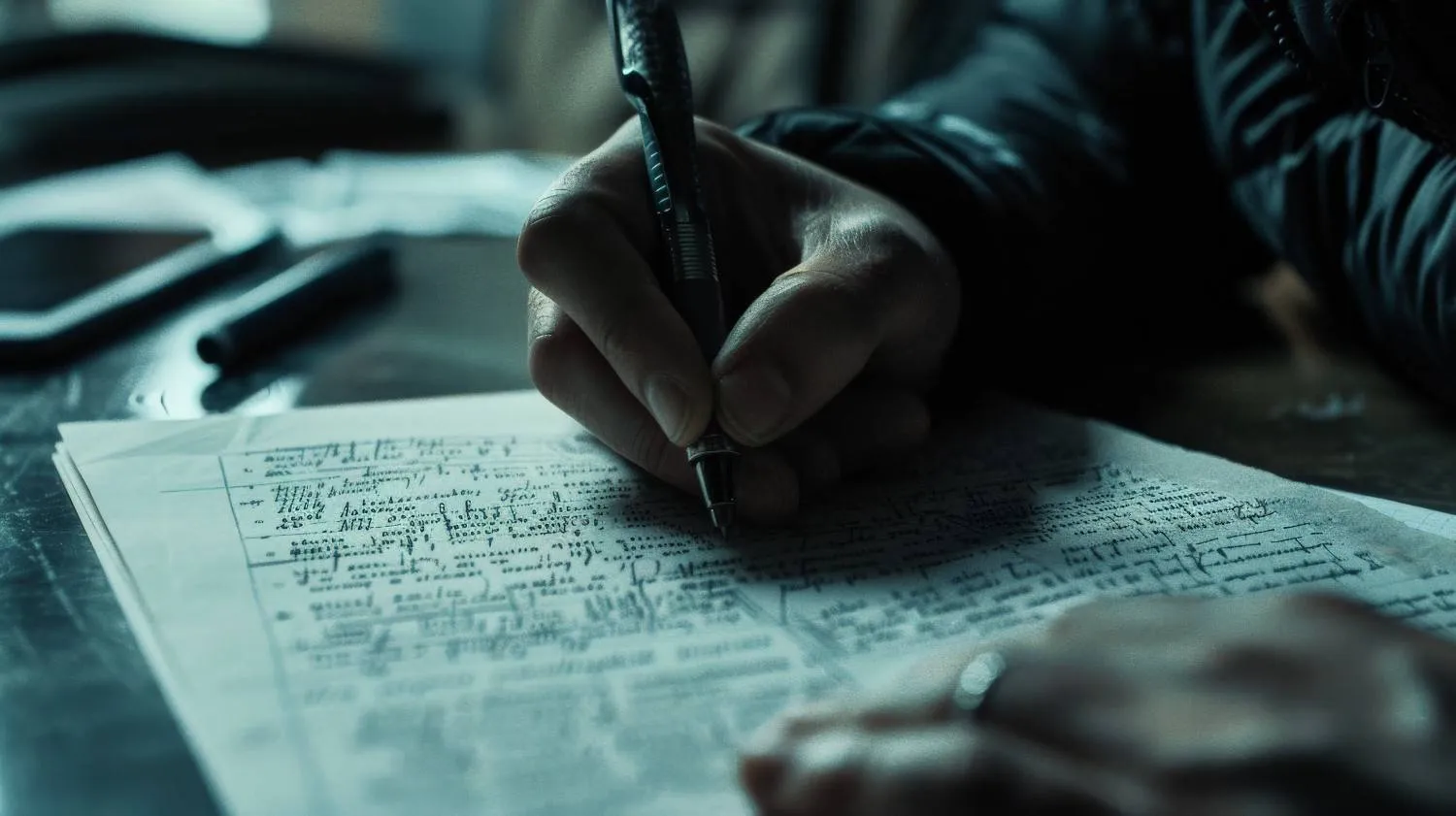
During the manuscript review process, a book editor shapes and refines a raw manuscript into a polished, market-ready book by collaborating with the author to improve story structure, voice, readability, and technical accuracy. Contrary to popular belief, editors rarely rewrite the book for the author; instead, they act as a critical mirror, highlighting what works and guiding the revision process.
Because a single pass cannot fix every issue, the review process is broken down into four distinct structural and macro-to-micro stages.
1. Developmental Editing (The “Big Picture” Pass)
This is the earliest and most intensive stage of review. The developmental editor evaluates the manuscript as a whole puzzle, ensuring the foundation of the book is sound.
- Fixing Plot Holes: Identifying logic gaps, unresolved conflicts, or timeline contradictions.
- Shaping Characters: Evaluating if character motivations are clear, arcs are satisfying, and voices are distinct.
- Pacing and Structure: Assessing if the story drags in the middle, moves too fast, or if chapters should be reordered.
- The Editorial Letter: The editor delivers these notes via a multi-page, comprehensive strategic letter detailing what needs to be cut, expanded, or rewritten.
2. Line Editing (The Stylistic Pass)
Once the structural foundation is secure, a line editor reviews the manuscript sentence by sentence to maximize the artistic impact of the language.
- Elevating Prose: Improving vocabulary, tightening loose sentences, and smoothing out awkward phrasing.
- Maintaining Voice: Ensuring the author’s unique narrative voice or the specific characters’ dialogue remains consistent throughout the book.
- Controlling Flow: Tweaking the internal rhythm and emotional weight of paragraphs to keep the reader engaged.
3. Copy Editing (The Technical Pass)
Copy editing shifts the focus entirely to rules, formatting, and technical execution. This pass strips away mechanical distractions.
- Grammar and Mechanics: Correcting typos, punctuation errors, syntax mistakes, and improper word usage.
- Enforcing Style Guides: Aligning the text to a specific style manual (like the Chicago Manual of Style) for capitalization, numbers, and hyphenation preferences.
- Continuity Checks: Tracking tiny background details to ensure a character’s eyes don’t change color from chapter 2 to chapter 10, or that they aren’t wearing a jacket they took off three pages prior.
4. Proofreading (The Final Verification)
Proofreading is the final safety net before the book is sent to production or formatting. It is strictly mechanical.
- Catching Leftovers: Finding the few stray typos, double spaces, or missing punctuation marks missed in previous rounds.
- Formatting Layout: If reviewing formatted page proofs, checking for weird line breaks, bad word hyphenations, or missing page numbers.
Summary of Differences
| Editing Stage | Main Focus | Example Editor Action |
| Developmental | Story, Plot, Structure, Pacing | “Cut Chapter 4 completely and merge these two minor characters.” |
| Line Editing | Tone, Style, Flow, Clarity | “Let’s change this passive phrasing to active verbs to speed up the action.” |
| Copy Editing | Grammar, Consistency, Accuracy | “Fixed the spelling of this location name so it matches page 42.” |
| Proofreading | Final Quality Control, Layout Errors | “Removed a stray double-period at the end of this paragraph.” |
A book editor evaluates a manuscript, identifies what keeps it from serving its reader, and guides the author through revision. In short, what does a book editor do? The editor examines structure, clarity, voice, consistency, and correctness at the level agreed upon before work begins.
However, manuscripts can hide plot gaps, repeated ideas, or confusing passages that authors no longer notice. Those issues can weaken trust and make later proofreading less useful. Therefore, a defined review gives the author a revision plan before design and publication.
Key Takeaways
- Editors diagnose the manuscript before making changes.
- Developmental, line, copy, and proof stages solve different problems.
- Authors receive edits, queries, and a record of style decisions.
- Editing improves the text, while formatting prepares its visual presentation.
What Does a Book Editor Do Before Changing the Manuscript
An editor first confirms the audience, genre, publishing goal, and requested level of work. According to Editors Canada, its standards cover four stages: structural, stylistic, copy, and proofreading.
A careful editor may review a sample and flag problems outside the agreed scope. For example, a copyeditor who finds a weak plot should explain it instead of silently rebuilding it. Therefore, Editing and Proofreading Services should state the level, deliverables, schedule, and review passes.
How Does an Editor Review Structure and Content
A structural or developmental editor tests whether the book works as a whole. For fiction, that means checking plot logic, character motivation, point of view, pacing, and scene order. For nonfiction, the focus shifts to the central promise, argument, chapter order, evidence, and missing explanations.
According to the Editorial Freelancers Association, developmental editing addresses content, organization, and genre. Therefore, the main deliverable is often an editorial letter that ranks concerns and suggests a revision path. Additionally, comments show where each concern appears, while the letter explains the pattern.
Moreover, genre knowledge changes the questions an editor asks. For instance, suspense depends on controlled disclosure, while family history needs chronology and context. Authors using Fiction Ghostwriting support still need editorial review because drafting and evaluating are separate jobs.
| Review stage | Main question | Typical checks | Common output |
| Developmental or structural | Does the book work as a whole | Purpose, plot, order, gaps, pacing | Editorial letter and comments |
| Line or stylistic | Does each passage read well | Voice, tone, flow, clarity, repetition | Tracked sentence edits |
| Copyediting | Is the text correct and consistent | Grammar, spelling, usage, facts within scope | Marked manuscript and style sheet |
| Proofreading | Did errors remain after layout | Typos, headings, page elements, spacing | Corrections on proofs |
Book editing explained clearly means separating each stage’s question and output. However, service names vary. Consequently, an author should compare the tasks, not the label alone.
How Does an Editor Improve the Writing Line by Line
A line or stylistic editor improves clarity, flow, tone, and sentence rhythm without replacing the author’s identity on the page. According to Editors Canada, stylistic editing clarifies meaning, supports coherence, and refines language at paragraph and sentence level.
During this editor manuscript review, the editor cuts repetition, repairs awkward transitions, and points out vague wording. However, a responsible editor preserves purposeful dialect and humor when they serve the voice. In memoir, polished language should not make an intimate memory sound like a formal report.
Comments are better than silent rewrites when meaning is uncertain. For example, a query might ask when an event occurred or whether a scene is intentionally ambiguous. That approach matters in Memoir Ghostwriting Services, where factual accuracy and personal voice are distinct concerns.
What Does a Copyeditor Check in the Details
A copyeditor corrects grammar, punctuation, spelling, usage, and inconsistency. According to Editors Canada, copyediting includes checking that required content elements are accurate and complete. Specifically, the editor may compare names, dates, citations, cross-references, capitalization, and number treatment.
In addition, the editor records recurring decisions in a style sheet. The Chicago Manual of Style describes style sheets as lists of project rules and reminders. Therefore, one may record spellings, character details, timelines, abbreviations, and exceptions. Microsoft Word Track Changes lets the author review visible revisions.
Fact-checking has a limit. Unless the contract includes research verification, an editor may query a doubtful statement without confirming every claim. Likewise, editing cannot settle copyright, defamation, or permission questions. Authors considering Canadian Ghostwriters should ask what verification is included and seek a qualified lawyer when a manuscript raises legal risk.
What Does the Author Receive After the Review
The author usually receives a marked manuscript plus notes suited to the agreed service. Developmental work may include an editorial letter. In contrast, copyediting may include tracked changes, queries, and a style sheet.
A useful handoff separates corrections from judgment calls. First, the author reads the main letter. Then, larger revisions come before sentence-level changes. Finally, each edit receives a separate review.
Microsoft Word is common for manuscripts, while Adobe Acrobat can hold PDF proof corrections. Editors Canada’s certification process uses Word for structural, stylistic, and copyediting tests and PDF markup for proofreading.
How Does Editing Fit Into the Publishing Process
The editing process should finish before the final layout. The usual sequence is developmental work, author revision, line or copyediting, formatting, and proofreading. However, the path depends on the manuscript and publisher.
Formatting is a separate production task. According to Amazon KDP, a paperback upload uses an interior file and a separate cover file, with trim size and margins also addressed. Therefore, an editor can prepare the words without creating the final print or ebook layout.
FAQs
Does a book editor rewrite the entire manuscript
No, a book editor does not normally rewrite the entire manuscript unless rewriting is part of the contract. Instead, the editor suggests, queries, or makes changes that match the agreed level. Developmental work can recommend large revisions, while line and copy work usually stay closer to the author’s existing text and voice.
How long does an editor spend reviewing a manuscript
The time depends on word count, complexity, manuscript condition, and editing level, so there is no honest universal timeline. A heavy developmental edit takes different work from a clean proofread. Therefore, the editor should inspect a sample or the full file before confirming the schedule and explain what each review pass includes.
Should an author accept every suggested edit
No, the author remains responsible for the final text and should review each substantive change. Editors bring trained judgment, but a query may reveal context they did not have. Consequently, the strongest result comes from discussing unclear changes, answering questions, and preserving intentional choices that support the book’s audience and purpose.
Is editing the same as proofreading
No, editing and proofreading occur at different points and solve different problems. Editing may address structure, style, grammar, and consistency before layout. According to the Editorial Freelancers Association, proofreading is a final check after editing, including remaining errors and typesetting elements such as chapter titles, running heads, and page flow.
Does a book editor also format the book
Not automatically, because editing and formatting require different tasks and files. Editing improves the language and content, while formatting sets margins, trim size, headings, spacing, and ebook behavior. Authors can review a detailed Book Formatting Services Compared guide before choosing the next production service.
Conclusion
The answer to what a book editor does depends on the contracted level. An editor diagnoses problems, explains their effect on readers, proposes revisions, and checks the text against an agreed standard. Therefore, authors should request a clear scope, sample edit, deliverables list, and revision process. Canadian Ghostwriters can match the manuscript with the right stage.