
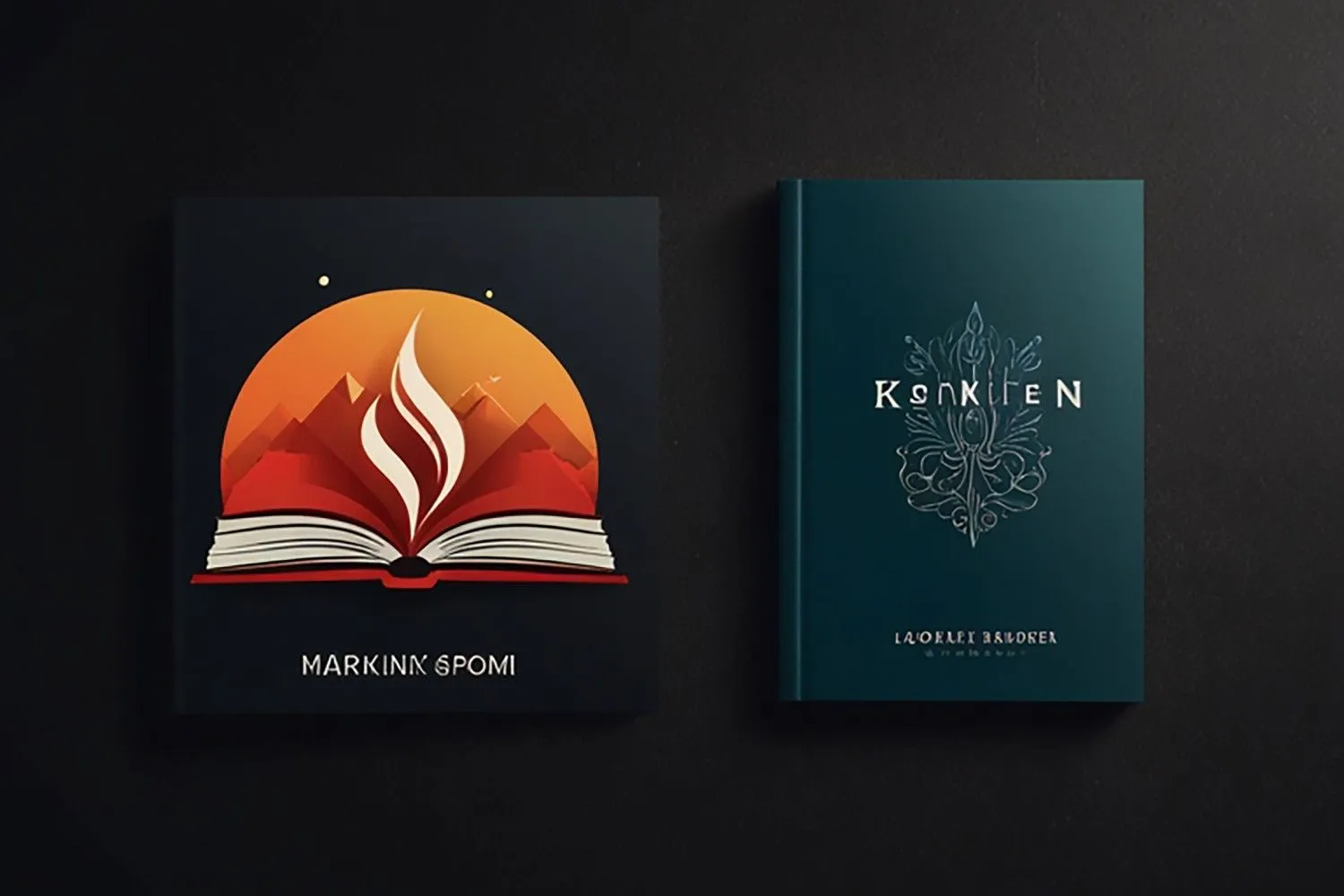
Your book cover is your most important marketing tool because it dictates split-second purchase decisions, directly controls your click-through rates, and serves as the foundation of your author brand. In modern, thumbnail-heavy digital marketplaces like Amazon and Goodreads, a book cover functions as a silent salesperson working 24/7 to convert casual browsers into buyers.
The Psychology of the Split-Second Decision
Readers make an immediate judgment about a book within three seconds of seeing the cover.
- The Hook: A compelling graphic and layout instantly grab consumer attention in an overcrowded market.
- High Influence: Data shows that 57% of consumers have purchased a book based solely on its cover.
- The Filter: Conversely, 80% of readers admit to actively avoiding a book if the cover looks unprofessional.
Communicating Genre and Tone Instantly
Your cover is a visual shorthand that tells target readers exactly what to expect from your manuscript.
- Genre Alignment: Specific design choices act as placeholders for consumer expectations, such as cupcakes for cozy mysteries or dark typography for thrillers.
- Emotional Hook: Color palettes and imagery subconsciously target consumer emotions before they even read the synopsis.
- Typography Signals: Font choices clearly differentiate romance from science fiction, ensuring you attract the correct target audience.
Maximizing Discoverability and Perceived Value
A professional cover directly impacts your book’s market positioning and digital performance.
- Thumbnail Performance: Online buyers browse tiny images; a high-contrast, scalable design increases clicks significantly.
- Quality Assurance: Readers equate professional cover execution with high-quality writing and professional editing.
- Pricing Leverage: High-end, cohesive design elevates the perceived value of your book, allowing you to justify a premium retail price.
Establishing Long-Term Author Branding
For authors with multiple titles, the cover transitions from an individual advertisement to a long-term business asset.
- Visual Identity: Consistent spines, formatting, and design styles cultivate a memorable brand.
- Repeat Sales: Readers who recognize your signature design style are far more likely to buy future releases.
- Collector Appeal: Uniform series layouts encourage readers to buy physical copies to complete their home collections.
Book cover design marketing in Canada matters because the cover is often the first sales message a reader sees. It signals genre, tone, and quality before the description is opened. A weak cover can lose attention, while a clear, market-aware design gives the book a fair chance to be considered.
Authors often treat the cover as decoration added after writing. As a result, vague imagery, tiny type, or wrong genre cues can make a strong manuscript look amateur. Instead, the cover should be built as a marketing asset and tested wherever readers will see it.
Key Takeaways
- A professional book cover communicates the book’s audience and promise within a small space.
- Clear cover typography, strong contrast, and a focused image improve thumbnail reading.
- Ebook art and print wraps require different technical files.
- Testing gives authors better evidence than asking whether a design simply looks attractive.
Why does book cover design marketing in Canada matter
A book cover is a compact advertisement in retailer searches, recommendation rows, ads, emails, and social posts. Therefore, it must attract the right reader and explain the category. Beauty is not enough if a thriller resembles a memoir or a business guide resembles a romance novel.
Technical accuracy protects that first impression. According to Amazon KDP, the ideal ebook cover measures 2,560 pixels high by 1,600 pixels wide, uses JPEG or TIFF format, and stays below 50 MB. These rules do not prove that a design will sell, but they help prevent blur and upload trouble.
What makes a professional book cover earn attention
An effective cover combines a clear promise with genre signals that readers understand. For example, a restrained type-led layout may suit a business book, while suspense may need tension, contrast, and an image that raises a question. However, copying another title too closely can confuse its positioning and weaken the author’s identity.
Next, the designer establishes visual hierarchy, or the order in which the eye notices the title, image, subtitle, and author name. The title should remain readable at thumbnail size. In addition, the image should create one focal point instead of forcing several ideas into a small frame.
| Cover element | Weak execution | Market-ready execution |
| Title | Thin, crowded, or low contrast | Clear at full size and thumbnail size |
| Image | Generic or unrelated | Supports genre, tone, and central promise |
| Subtitle | Competes with the title | Adds context without crowding |
| Series look | Each volume feels unrelated | Consistent type, placement, and visual motif |
| File setup | One file reused everywhere | Separate files prepared for each format |
These choices require design judgment and publishing knowledge. Authors can use Book Cover Design Services to connect the manuscript’s promise with correct ebook, paperback, and hardcover production files. That said, a designer still needs an accurate brief, final trim size, confirmed title, and clear audience.
How should a cover perform online and in print
Online, the front cover must stay clear when reduced across phones, tablets, and desktop screens. Thumbnail legibility means the title, contrast, and central shape survive that change. Consequently, long subtitles, review quotes, and detailed scenes should be tested at the size used in retailer results and mobile ads.
Retail platforms also apply their own technical standards for submitted marketing images. According to Apple Books, cover art must use RGB, span at least 1,400 pixels on the shorter axis, and arrive as a high-quality JPEG or PNG.
In addition, screen and print workflows require different checks before export. Therefore, authors should not assume an Amazon-ready image meets every store’s current requirements.
Print covers add a spine, back cover, barcode area, safe zones, and print bleed, which extends artwork beyond the trim edge. They also need balanced back-cover content at the chosen trim size. Page count, paper, and binding affect spine width, so the wrap should be built after those details are final. Moreover, screen colors may shift in print.
Final pagination should be confirmed before the print wrap is exported. For that reason, interior formatting support should be settled before the designer calculates the spine. Specifications can change, so the current printer template should guide the final file.
How can authors judge whether a cover is working
Authors should judge a cover by relevance, readability, and response, not personal taste alone. First, compare it with recent books bought by the intended audience. Then check whether an unfamiliar reader can identify the genre, read the title on a phone, and explain the promise without seeing the description. Useful book cover tips include the following checks.
- View the design in grayscale to find weak contrast.
- Reduce it to thumbnail size and test the title.
- Place it beside five genre titles and check whether it belongs without disappearing.
- Show versions to target readers who do not know the author.
- Test one meaningful change at a time.
Paid testing can add behavioral evidence. According to BookBub, its Featured Deal tests found that a cover alone could account for a 30% difference in clicks. Still, click response is not the same as purchase response; price, description, reviews, audience targeting, and the sample pages can change the final outcome.
When should an author redesign an existing cover
A redesign is worth considering when the cover no longer matches its market or receives weak response from qualified traffic. Specifically, warning signs include an unreadable thumbnail, dated genre cues, inconsistent series branding, or an old trim size. It may also help when the book moves into a clearer subgenre.
However, the cover should not be blamed for every sales problem. Weak retail metadata, confusing copy, poor targeting, or an unconvincing sample can also reduce conversions. Therefore, authors should review the product page and campaign before paying for new art.
FAQs
Is a book cover more important than the book description
The cover and description perform different jobs, but the cover often earns the first look. It signals category and tone, while the description explains the story or benefit in more detail. Therefore, a strong cover cannot replace persuasive copy, and strong copy may never be read if the visual message loses the right reader.
Can an author design a book cover in Canva
An author can use Canva to make a cover, especially for an early concept or a limited budget. However, template terms, font permissions, stock-image rights, print setup, and genre fit still need review. Because asset terms vary, authors should read each license or seek qualified advice before commercial use.
Does a good cover guarantee book sales
No, a good cover does not guarantee sales. It can improve the chance that the right reader pauses, clicks, or reads the description, but the manuscript, positioning, price, reviews, distribution, and promotion still matter. In other words, the cover opens the conversation; the rest of the product must support its promise.
Should every book in a series use the same cover design
Series covers should share a recognizable system, not an identical design. Consistent typography, placement, or imagery can build series branding, while each volume keeps its title. Authors planning linked releases with a Canadian action adventure ghostwriter should discuss that system before the first cover is approved.
Conclusion
A cover is the book’s smallest complete sales message. It should identify the audience, remain clear as a thumbnail, meet platform specifications, and support promotion. However, judge its performance alongside the description, sample, reviews, price, and traffic source.
For authors considering book cover design marketing in Canada, the next step is a clear brief, genre references, and tests in every planned format. Canadian Ghostwriters can turn that brief into a cover made for readers and publishing platforms.