
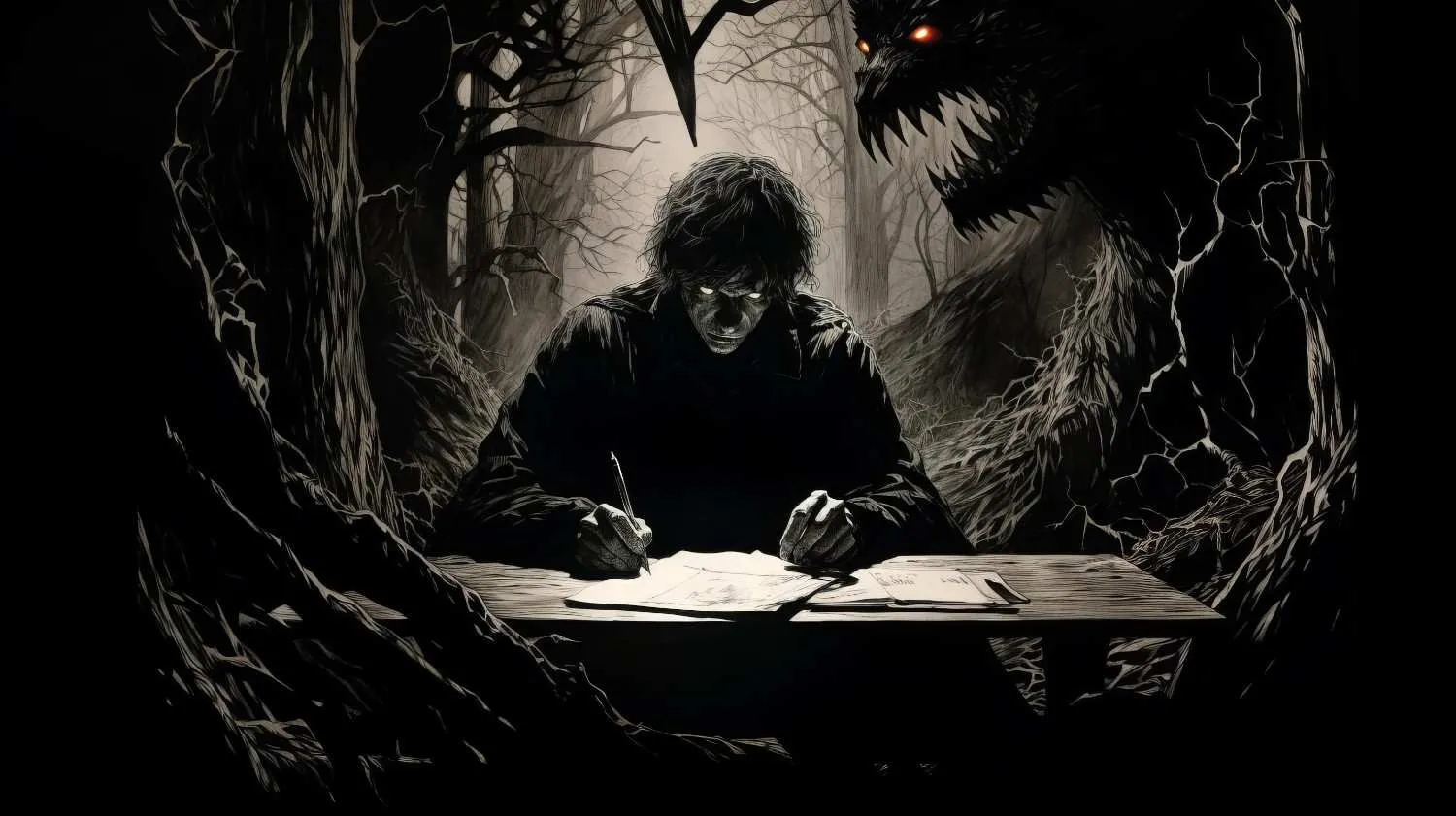
Writing a horror novel requires balancing deep psychological dread with precise narrative pacing. This guide covers the entire process from your first idea to a published book.
Phase 1: Conceptualization and World-Building
Great horror maps out the boundary between the safe world and the invading terror.
Choose Your Subgenre
Horror relies heavily on reader expectations. Select a clear framework:
- Gothic: Focuses on decaying settings, family curses, and romance (e.g., Rebecca).
- Cosmic: Centers on insignificance, ancient gods, and madness (e.g., Lovecraftian).
- Slasher: Driven by a human antagonist, high body counts, and survival.
- Psychological: Distorts reality, unreliable narrators, and internal torment.
- Paranormal: Involves ghosts, demons, hauntings, and spiritual realms.
Establish the Rules of the Monster
Whether your threat is a ghost, a virus, or a serial killer, it needs boundaries.
- Define what the entity can do.
- Define what the entity cannot do.
- Determine its origin or motivation.
- Keep the rules consistent to maintain tension.
Design the Atmosphere
The setting should feel like a living character that isolates your protagonists.
- Use sensory details beyond sight (e.g., wet thuds, sulfur smells, cold drafts).
- Utilize architectural entrapment (e.g., winding corridors, locked basements).
- Leverage weather to limit escape options (e.g., blizzards, torrential rain).
Phase 2: Plotting and Pacing
Horror pacing mimics an EKG monitor, constantly spiking anxiety and offering brief valleys of relief.
[Inciting Incident] [The Midpoint] [Climax]
/\ /\ /\
/ \ / \ / \
___________/ \_______ / \ / \
/ \____________/ \______________/ \___
[Status Quo] [Rising Tension] [False Security] [Resolution]
The Standard Horror Arc
- The Status Quo: Establish a normal world so the reader feels the weight of what is lost.
- The Inciting Incident: The first subtle intrusion of the strange or threatening.
- The Refusal: Characters rationalize away the threat (e.g., “It was just the wind”).
- The Escalation: The danger becomes undeniable; escape routes begin to close.
- The Midpoint Shift: A major revelation occurs; the characters shift from defense to offense.
- The Dark Night: The lowest point where victory feels utterly impossible.
- The Climax: The final, direct confrontation with the source of terror.
- The Resolution: A return to a new normal, often with a lingering hint of malice.
Phase 3: Characterization
Readers only feel fear if they care about the characters experiencing it.
Avoid Trope Traps
- Replace the “skeptic” with someone who has a logical, high-stakes reason to doubt.
- Ensure characters make intelligent choices based on the limited information they have.
- Give protagonists internal flaws that the monster or setting can actively exploit.
The Sympathy Anchor
Give your main character a deeply human vulnerability early in the story. If a protagonist is grieving a lost child, a haunting that mimics that child’s voice becomes terrifying on both a physical and emotional level.
Phase 4: Drafting Techniques
The mechanics of your sentences must shift to manipulate reader heart rates.
The Dread vs. Shock Balance
- Dread (The Build-up): Use long, complex sentences to stretch out time and delay gratification.
- Shock (The Scare): Use short, punchy, fragments for sudden violence or realizations.
Subverting Anticipation
Do not always deliver the scare when the music swells. Let the character open the creepy closet to find nothing but coats, only to find the threat waiting for them when they turn back to the safe room.
Phase 5: Revision and Polishing
Revision is where you sharpen the blades of your prose.
The Horror Edit Checklist
- Chop the Clichés: Remove overused phrases like “blood-curdling scream” or “shiver down the spine.”
- Audit the Information: Ensure the reader knows just enough to be scared, but not enough to feel safe.
- Track the Tension: Read your scary sequences aloud to check if the sentence rhythms match the panic.
- Verify Agency: Double-check that your characters are actively fighting back, not just being dragged from scare to scare.
Phase 6: The Path to Publication
Once your manuscript is polished, choose the publishing path that aligns with your career goals.
[Polished Manuscript]
|
—————+—————
| |
[Traditional Path] [Self-Publishing Path]
| |
[Write Query Letter] [Hire Professional Editor]
| |
[Pitch Literary Agents] [Commission Cover Designer]
| |
[Publisher Acquisition] [Format eBook & Paperback]
| |
[Market & Launch] [Upload to KDP / IngramSpark]
Traditional Publishing
- Write a Pitch-Perfect Query Letter: Include a hook, a brief summary, your bio, and comp titles.
- Target Horror Agents: Look for agents representing authors similar to your style.
- Submit Pages: Follow submission guidelines exactly (usually the first 5 to 10 pages).
- The Submission Loop: Be prepared for multiple rounds of rejections before finding a match.
Self-Publishing
- Hire Professionals: Never skimp on a developmental editor and a professional proofreader.
- Invest in the Cover: Horror readers buy based on cover vibes; ensure your art matches current genre trends.
- Format Correctly: Use tools like Vellum or Atticus to create clean digital and print layouts.
- Choose Distribution: Decide between Kindle Unlimited exclusivity or going wide across all retailers.
A practical horror novel guide in Canada takes an author from a fear-based premise through plotting, drafting, revision, production, and release. Without that order, scares become random and late publishing problems waste time. Therefore, the sound method is to define the reader’s fear, build escalating consequences, edit in stages, and prepare each edition correctly.
Weak horror often has a monster but no emotional threat. As a result, readers may notice the gore yet feel little dread. This guide shows authors how to turn one disturbing idea into a publishable novel.
Key Takeaways
- Start with a specific fear, vulnerable character, and lasting consequence.
- Escalate pressure before revealing the full threat.
- Revise structure before polishing sentences.
- Prepare each print and digital edition to its platform rules.
What makes a horror concept strong enough for a novel
A strong horror premise combines a recognizable fear with fresh pressure. First, the author should state the premise in one sentence that identifies the protagonist, threat, goal, and cost of failure. Moreover, the threat needs rules, even when the reader does not learn each one.
For example, Shirley Jackson’s The Haunting of Hill House makes a house frightening through uncertainty and Eleanor’s unstable sense of belonging. Stephen King’s The Shining ties the Overlook Hotel to Jack Torrance’s weaknesses. Authors who need help turning a premise into a workable brief can ask Canadian Ghostwriters for support before drafting.
How should a horror plot create dread
A horror plot creates dread by narrowing safe choices while increasing the price of action. Specifically, each major turn should change what the protagonist believes, remove an escape, or expose a worse danger. A useful horror book guide therefore separates suspense, shock, and aftermath instead of treating every scene as a scare.
- Establish normal life and the character’s private weakness.
- Introduce an intrusion that can still be denied.
- Confirm the threat and make retreat costly.
- Force a choice that reveals character.
- Let the climax answer the story’s main moral question.
However, the middle should not repeat attacks at a louder volume. Each encounter must add information or damage a relationship. Consequently, the final confrontation feels earned because earlier choices created it.
How do character and setting make fear believable
Character makes danger matter, while setting controls how it reaches the page. Specifically, the protagonist needs a desire beyond survival, such as protecting a child or repairing a marriage. Meanwhile, the antagonist should attack that exact vulnerability.
Furthermore, setting works best as a system of limits. Weather, distance, architecture, local history, and social rules can block help without making characters foolish. For projects that need sustained voice and continuity across those elements, Horror Writing Services can support planning and manuscript development.
What drafting process keeps tension rising
The strongest horror novel writing process tracks tension scene by scene. First, the author can mark each scene with its goal, obstacle, new information, and emotional result. Then, the scene should end with a changed condition rather than a routine pause.
In practice, restraint often produces more fear than constant description. According to the Horror Writers Association, author Tim Waggoner distinguishes disturbing readers from merely grossing them out and advises restraint with extreme material. Therefore, sensory detail should imply danger before displaying the source.
How should a horror manuscript be revised
A horror manuscript should be revised from large problems to small ones. First, structural editing tests the plot, pacing, viewpoint, and ending. According to Editors Canada, structural editing assesses the overall organization and content for the intended audience, medium, and purpose.
After that, line and copy edits improve clarity, consistency, grammar, and continuity. Finally, proofreading follows layout because it checks the final text and presentation. Professional Editing and Proofreading Services are most useful when the author defines the manuscript’s current stage.
Why use a write horror novel guide in Canada before publishing
First, Canadian authors should settle rights, identifiers, files, and publishing route before release. According to the Canadian Intellectual Property Office, an original literary work receives copyright protection when created in a fixed form. However, this article gives general information, not legal or financial advice.
| Publishing path | First gate | Author control | Main trade-off |
| Traditional publishing | Agent or publisher acceptance | Contract dependent | Production decisions follow the contract |
| Direct self-publishing | Retail platform account | High | The author manages editing, files, metadata, and release |
| Assisted self-publishing | Service agreement | Shared | Scope, fees, and rights need review |
According to ISBN Canada, eligible Canadian publishers can receive free ISBNs, and each specific edition needs its own 13-digit identifier. Additionally, Amazon KDP states that Kindle eBooks do not require page numbers, headers, or footers because their text is reflowable. Suitable Book Formatting Services can prepare distinct files for print and digital use.
How should the cover and listing prepare readers
A horror cover should signal tone and subgenre without explaining the whole plot. For instance, gothic horror, body horror, and supernatural horror use different visual promises. According to Amazon KDP, a paperback cover upload must be one PDF containing the back cover, spine, and front cover.
Metadata must match the book readers receive. Therefore, the title, description, categories, and keywords should describe the actual threat and audience. After the trim size, page count, paper, and bleed settings are final for each edition, professional Book Cover Design Services can align genre cues with the required dimensions.
FAQs
How long should a first horror novel be
A first horror novel should be as long as its plot needs, because publishers and categories set different expectations. Instead of padding toward an assumed number, the author should confirm current submission rules for the chosen agent, press, or platform. Every chapter must increase pressure, reveal information, or deepen character.
Can a horror novel be scary without gore
Yes, a horror novel can create fear through uncertainty, isolation, guilt, loss of control, or an uncanny setting. In fact, suspense often grows when the reader sees part of the danger but cannot measure it. Gore is one available tool, not a requirement, and it should serve character and consequence.
Should an author reveal the monster early
The monster should be revealed when the story gains more tension from knowledge than uncertainty. First, the author can show effects, patterns, or partial evidence. Later, a clear reveal works when it changes the protagonist’s choices. Showing everything too soon can reduce mystery unless the visible threat creates a new form of dread.
Does a Canadian self-published author need an ISBN
A Canadian author needs an ISBN for many print and independently distributed editions, but platform rules differ for eBooks. According to Amazon KDP, a Kindle eBook does not need an ISBN. However, ISBN Canada assigns identifiers to eligible Canadian publishers, so the author should confirm the requirement for every format and sales channel.
What editing stage matters most for horror
Structural editing comes first because polished sentences cannot repair a repetitive plot or weak climax. It checks escalation, scene order, viewpoint, character choices, and payoff. After those parts work, stylistic editing, copy editing, and proofreading can refine the voice and remove errors without masking a larger story problem.
What horror fiction tips should guide the final check
The final check should confirm that the threat follows its rules and the ending pays off the central fear. Additionally, the author should remove repeated scares and test whether the protagonist’s last choice matters. For a focused genre refresher, review how to write a scary book that sells before approving the files.
Conclusion
The right horror fiction tips connect fear, character, escalation, editing, and production. To summarize, this horror novel guide in Canada gives authors a clear order from concept to publication. Canadian Ghostwriters can help shape the next stage when a premise, draft, or finished manuscript needs professional support.