
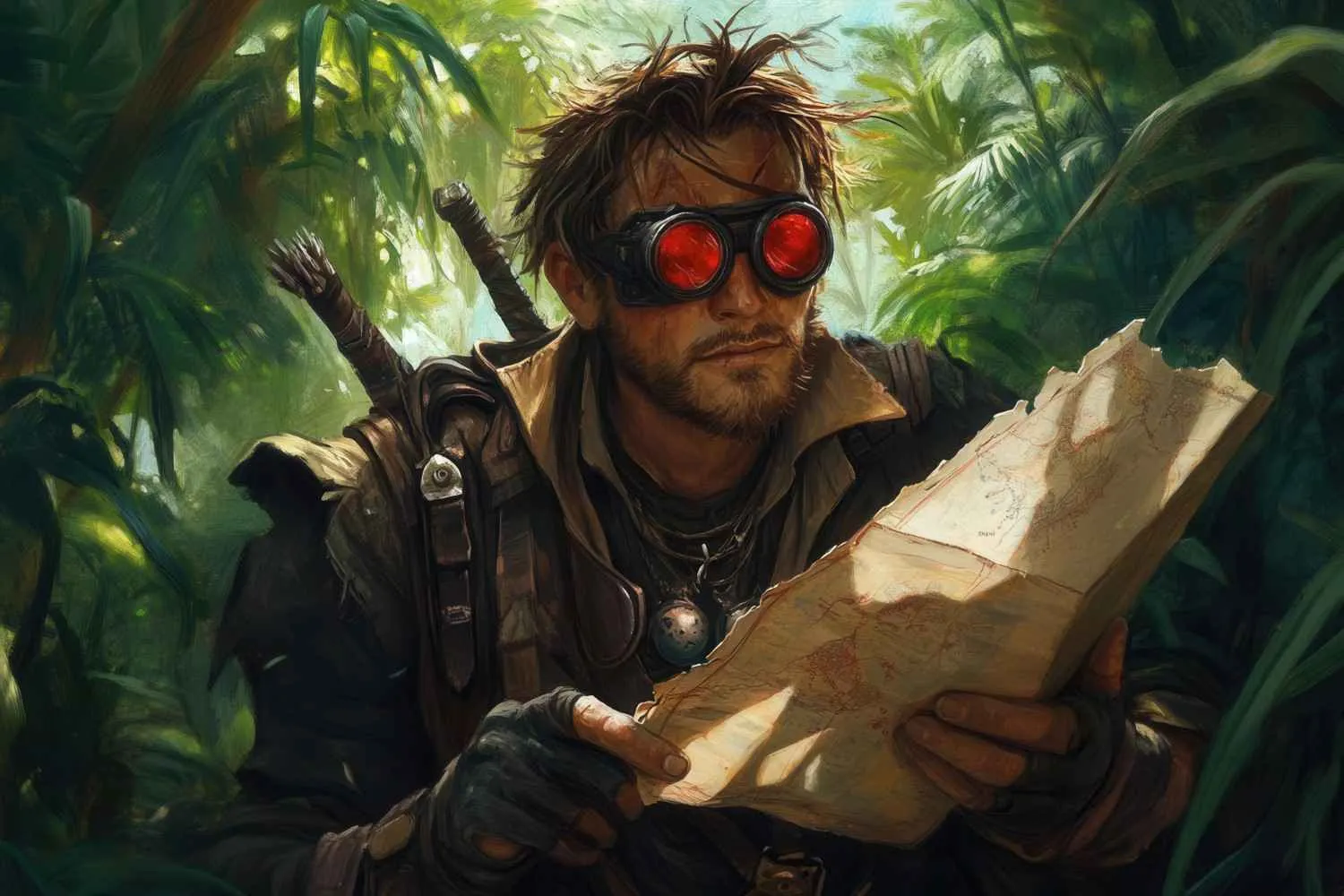
Action-adventure fiction is a fast-paced genre featuring a resourceful protagonist thrust into a high-stakes journey filled with physical danger, puzzles, and a ticking clock. Readers worldwide love it because it delivers an escapist rush of adrenaline while testing the limits of human resilience through universal themes of heroism.
Key Characteristics of the Genre
- High Stakes: The hero must stop a global disaster or save a life.
- Constant Movement: Characters travel to exotic, dangerous, or uncharted locations.
- Physical Danger: Stories feature frequent chases, battles, and death-defying traps.
- Ticking Clock: A strict time limit intensifies the narrative tension.
- Resourceful Hero: Protagonists rely on wit, grit, and specialized skills.
Why Readers Love It Globally
- Ultimate Escapism: It transports readers far away from mundane daily routines.
- Universal Themes: Good versus evil resonates across all cultures.
- Visceral Thrills: Fast pacing triggers genuine excitement and physiological rushes.
- Wish Fulfillment: It lets readers safely experience ultimate bravery and exploration.
- Emotional Triumph: Surviving overwhelming odds provides a deeply satisfying conclusion.
The action adventure fiction definition is fiction built around a dangerous mission, physical conflict, and a journey that forces a lead character to act. Readers may often confuse it with nearby genres. However, peril, movement, and stakes reveal the form.
Key Takeaways
- Action adventure combines a risky quest with physical obstacles.
- Decisions, setbacks, escapes, and discoveries move the plot.
- Suspense and mental travel explain its appeal.
- The genre can blend with history, fantasy, crime, war, or science fiction.
- Strong characters matter as much as physical danger.
What Is the Action Adventure Fiction Definition
Action adventure fiction follows an urgent goal through danger, movement, and confrontation. According to Barton Community College Library, the genre uses fast-paced plots, dangerous activities, and tasks across locations. Therefore, action changes whether the mission succeeds.
The “adventure” half adds discovery, travel, or unfamiliar conditions. Its job is to move the lead beyond ordinary routines and make the setting part of the problem. Therefore, a respectful story treats unfamiliarity as a character viewpoint rather than reducing a real culture to scenery.
An editorial test is to remove the physical barriers. If the story collapses without its pursuit, expedition, rescue, or escape, action adventure is probably primary. That result identifies the plot’s working engine.
What Elements Define the Action Adventure Genre
The action adventure genre depends on a goal, mounting danger, active choices, and consequences. Moreover, each major sequence should alter the situation. A chase works when it costs time, exposes a secret, or blocks the next route.
| Story element | What it does | Simple example |
| Urgent mission | Gives movement a purpose | Recover a stolen field journal |
| Physical peril | Makes failure immediate | Cross a flooded canyon |
| Unfamiliar setting | Creates discovery and risk | Enter an Arctic station |
| Escalation | Makes each setback harder | A guide disappears with the map |
| Character choice | Connects action to personality | Save a partner or continue the mission |
However, speed alone does not define the form. Scene pacing controls how quickly information, decisions, and consequences arrive. Authors may use Action-Adventure Writing Services to shape that core mission.
How Does Action Adventure Differ From Similar Genres
Action adventure differs from nearby genres because a physical mission and changing environment control the story. In contrast, a thriller centers on dread or conspiracy, while a mystery centers on finding an answer. Fantasy and science fiction describe a story world, so either can hold an adventure plot.
For example, Robert Louis Stevenson’s Treasure Island uses a map, voyage, mutiny, and treasure hunt. Ian Fleming’s James Bond novels combine espionage with travel and mission-based danger. Consequently, one overlaps sea fiction and the other spy fiction.
Genre labels remain flexible. According to Publishers Weekly, Ian McGuire’s 2016 list of notable adventure books includes The Odyssey, Moby-Dick, and Treasure Island. Therefore, editors judge the dominant plot engine when positioning a manuscript.
Why Do Readers Worldwide Love Action Adventure Fiction
Readers love action adventure because it pairs suspense with imagined travel and problem-solving. Specifically, a strong scene offers a clear goal, incomplete information, and a costly outcome. Readers then predict and revise expectations.
Suspense adds another layer. In action editing, it grows when readers understand the goal but cannot predict the outcome. However, response still depends on context, character attachment, and expectations.
Researchers call deep immersion narrative transportation. According to Green and Appel’s 2024 review, it concentrates thought, emotion, and mental imagery on narrative events. Therefore, a damaged ship or sealed ruin feels involved when it affects every choice.
Strong sequences alternate pressure and understanding. First, danger raises a question. Then, a pause allows interpretation. Finally, the next choice creates a sharper problem. During revision, editors can flag unclear geography, repeated escapes, and missing consequences.
Which Books Show the Genre’s Range
Action adventure ranges from ancient journeys to modern espionage. According to Publishers Weekly, The Odyssey is archetypal because Odysseus faces literal trials. Moreover, Treasure Island established familiar treasure-map elements.
Several examples show how easily the form crosses genre borders. Each keeps a mission central:
- The Three Musketeers by Alexandre Dumas blends swordplay, intrigue, loyalty, and travel.
- Jurassic Park by Michael Crichton joins science fiction with survival and escape.
- The Bourne Identity by Robert Ludlum combines espionage, pursuit, and lost identity.
- The Hunger Games by Suzanne Collins mixes dystopia with survival and political stakes.
These titles differ. For instance, some emphasize survival while others focus on rescue or treasure. A writer using Professional Ghostwriting Services should therefore define the book’s promise before choosing scenes or labels.
Who Is Action Novel Reading For
Action novel reading suits adults who enjoy clear objectives, changing locations, practical problems, and turning points. However, age does not define the audience. A reader over 45 may prefer historical detail, while another may choose modern survival.
The genre also serves readers who want more than nonstop conflict. In fact, equal intensity becomes tiring. Strong books vary the rhythm with planning, moral choice, recovery, and relationships.
Action cannot replace credible motives, clear geography, or emotional cost. Consequently, louder set pieces cannot repair a weak goal. Readers need to understand the objective, obstacle, and cost of failure.
What Should Authors Know Before Writing Action Adventure
Authors should design cause and effect before adding large scenes. First, the protagonist needs a specific objective. After that, each obstacle should force a decision. Finally, the ending should resolve the mission and its personal cost.
A useful sequence is goal, obstacle, choice, consequence, and new goal. For example, a pilot lands to rescue a researcher, loses fuel, and takes a dangerous ground route. As a result, action becomes a connected chain.
Writers can study stakes, pacing, and escalation in write an action adventure novel. However, no formula guarantees interest. Events must arise from character decisions instead of convenient accidents.
FAQs
Is action adventure the same as a thriller
No, action adventure and thriller are overlapping labels. Action adventure centers on a dangerous mission, movement, and physical obstacles. In contrast, a thriller gives more weight to dread, conspiracy, or psychological pressure. A novel can fit both when mission and suspense are central.
Does action adventure fiction need violence
No, action adventure fiction needs danger and consequential action, not graphic violence. For instance, storms, races, rescues, survival, and time-sensitive exploration create physical stakes. Characters must act under pressure and face a meaningful cost each time if their choices fail.
Can action adventure take place in one location
Yes, action adventure can stay in one location if the setting keeps changing available choices. A sinking ship, damaged research station, or cave system can support discovery and movement. However, the location must create fresh obstacles instead of repeating one scene.
What makes an action adventure protagonist effective
An effective protagonist has a clear goal, useful skills, human limits, and costly choices. Therefore, competence should not remove uncertainty. Readers connect when a character solves one problem but creates or uncovers another under growing pressure through that chosen solution.
Can action adventure mix with other genres
Yes, action adventure mixes with fantasy, science fiction, historical fiction, romance, crime, and war stories. The blend works when each genre affects the central mission. For example, fantasy magic should change risks or possible solutions, not serve as background decoration.
Conclusion
Action adventure fiction combines an urgent mission, physical danger, discovery, and choices that reshape the plot. Its appeal comes from suspense, imagined travel, problem-solving, and characters tested by consequences. Therefore, the action adventure fiction definition depends less on constant noise than on purposeful action.
Canadian Ghostwriters can help turn a promising premise into a clear mission with rising stakes and readable scene geography. A manuscript review is a sensible next step for a story that has energy but needs structure.